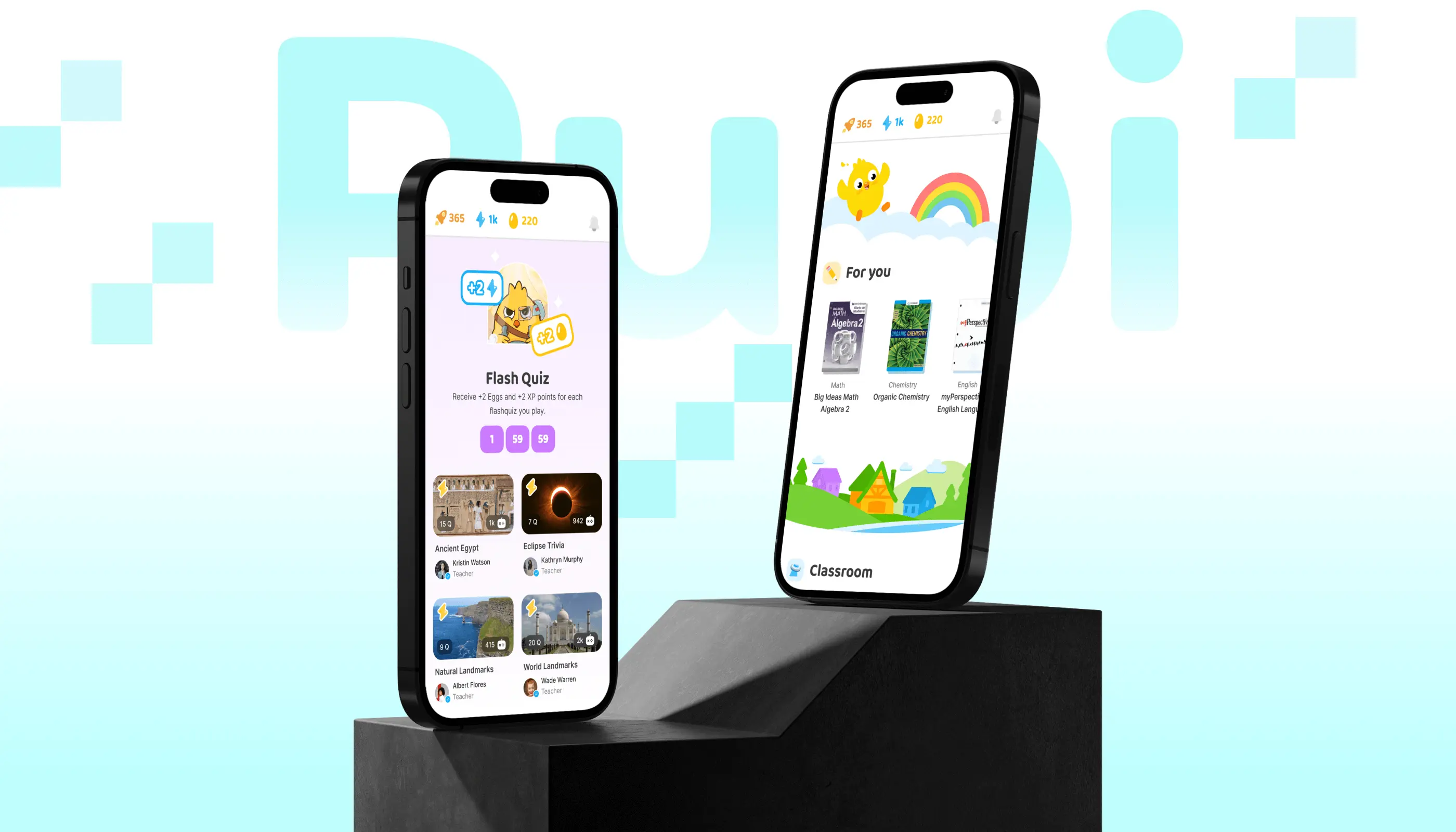
Pupi AI
Live SiteSolving exercises fast and accurate
- Role
- Product Designer
- Category
- Education, Gamification
- Team Size
- 5 Engineers1 Product Designer (me)
- Skills
- UI/UX Design, Visual Design
Growth Bold is a dynamic tech company in Ho Chi Minh City. It builds web, mobile apps. Its goal is creative solutions that grow business and improve user experience. Original Pupi (Học vui & Tiến bộ), the heritage quiz app, proves it — along with 10+ projects shipped from 2020 to 2025 with Agile pods and React Native + React / Next.js stack.
What I did as Product Designer in this team:
- Owned all design from zero to one: research summaries, user flows, user interface, prototypes, and the design system. Designed visuals, user experience, user interface, prototypes, and the Pupi chick mascot scenes.
My team and I built Pupi AI from start to finish: an AI solver grounded in Vietnamese textbooks, rebuilt as a learning loop — Ask → Explain → Practice → Earn experience points.
➤ Impact:
- Launch product from 0 to 1: Turned a vague AI homework idea into a clear Teaching + Guidance platform. Started with Math and English, and now covering almost all subjects across any grade.
- Mobile-first learning loop: A voice and text tutor. Adaptive courses. A quality-weighted Leaderboard.
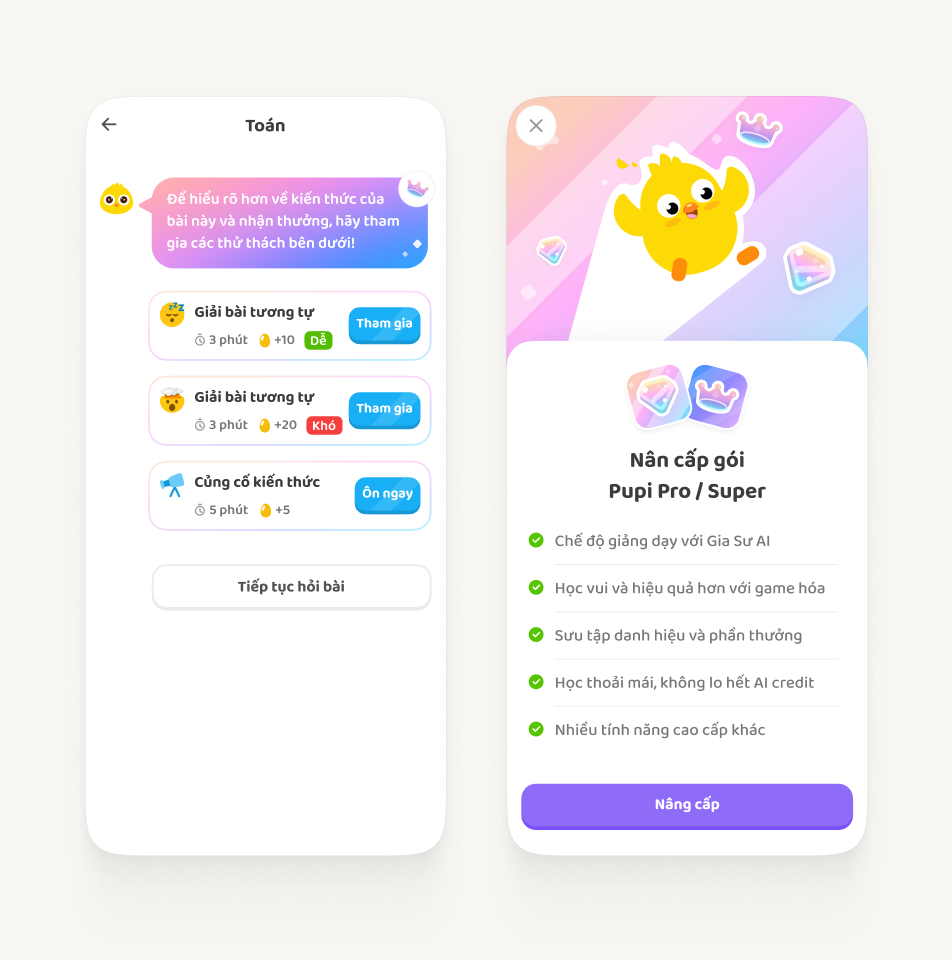
I. Problem
- Tone mismatch: Global tutors did not match Vietnamese school textbooks. Their Vietnamese sounded robotic or like slang, the level was wrong for the age, and the school tone was wrong. They made up facts in Literature, History, and Civics.
- No practice gate: Experience points were given for the number of questions, so kids collected answers without understanding them.
- No personal path: One-size lessons fail both ends. Strong students get no challenge at their level. Struggling students get work that is too hard. And extra classes and tutors cost too much for many families.
- No modern app: No modern study app exists. QANDA-type apps only want “answers”, not the “learning journey”. Nothing feels human. Nothing brings kids back, the way a friend does.
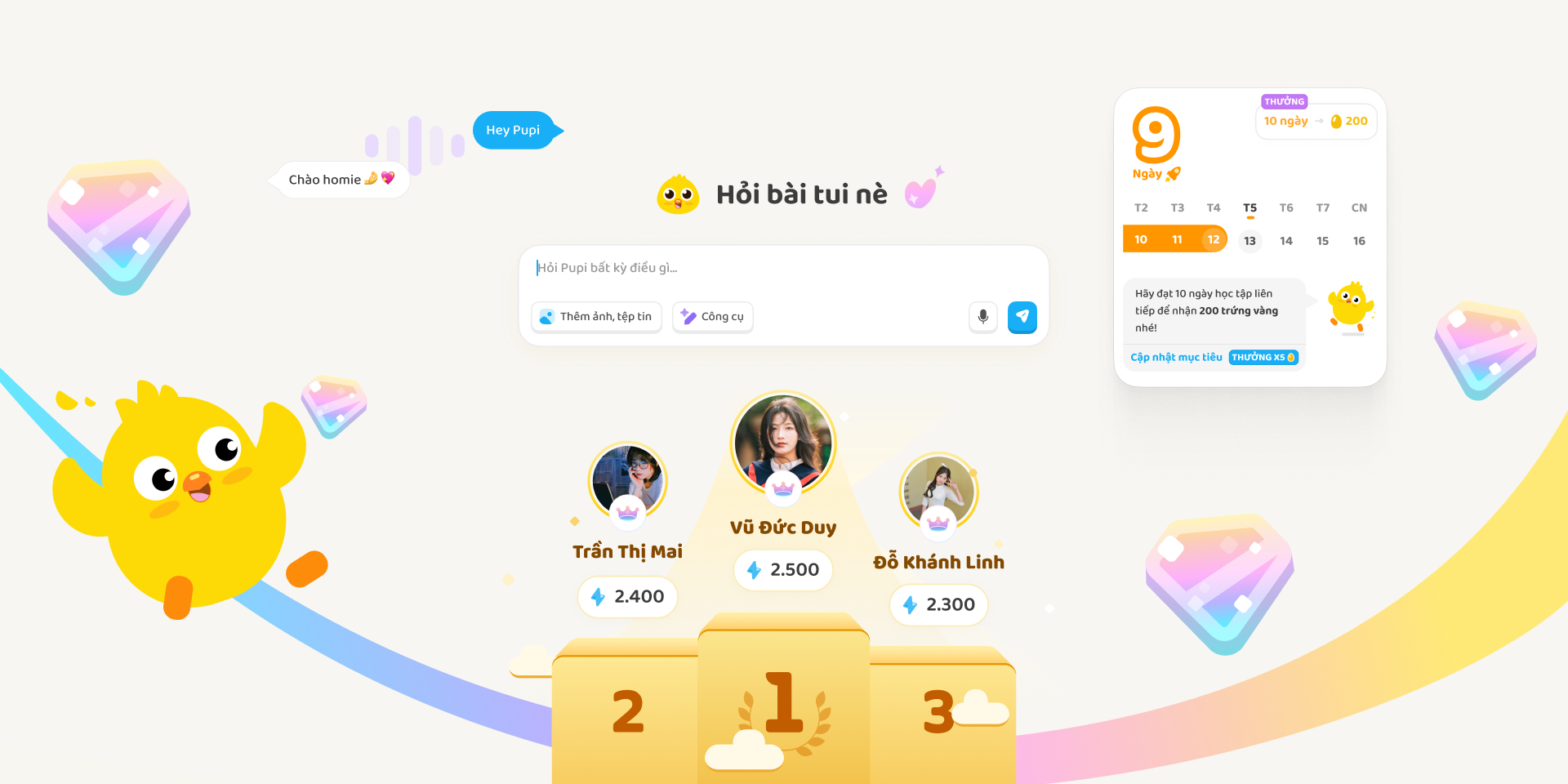
II. Goal
Turn answer shortcuts into effort-based learning habits that bring kids back
In short: help Vietnamese grades 6–12 understand step by step in natural Vietnamese. Let them practice right away. Reward completion — not copying.
What this means: a tutor with two modes. Teaching builds lessons like a professor. Guidance gives hints first like a buddy.
Leaderboard reward quality, not speed.
III. Design Process
1. Preparation
Timeline: Sep 2025 - Mar 2026
Constraints: Founder wanted an AI loop that competitors cannot copy, tied to learning progress and peer motivation — not faster answers. And students needed exam progress under pressure.
2. Research & Analytics
User Interviews: 5 interviews in Ho Chi Minh City with ex-K12 student AI users, plus an education advisor. We asked about past behavior, not feature votes.
- Last time you used AI for homework — what were you hoping, worried about, tried before?
- Why did you stop returning after getting the answer?
- What would make parents trust progress without surveillance?
Benchmarks & Data: We audited global AI tutors and Vietnamese education-technology apps. Gap: no one combined Vietnamese teaching methods with voice, adaptive paths, and friend groups personalize for student's strength and weakness.
The same audit mapped localization, teaching-method depth, gamification quality, and retention hooks — and we used it to kill answer-speed scope.
Market sizing: 18.4M students in grades 1–12 and about 900k teachers. About $200M went into Vietnamese education-technology startups in 2023. On a chart of Interaction vs Specialization for Vietnamese grades 1–12, Pupi stood alone at top-right, ahead of ChatGPT, Gemini, Grok, and AI Hay.
Hypothesis: If AI connects to learning progress and peer motivation (not faster answers), students will practice more and come back. Four user types guided us: Sprinter, Socializer, Quiet Grinder, Exam Crammer.
3. Prototyping
User flows first, testable screens later.
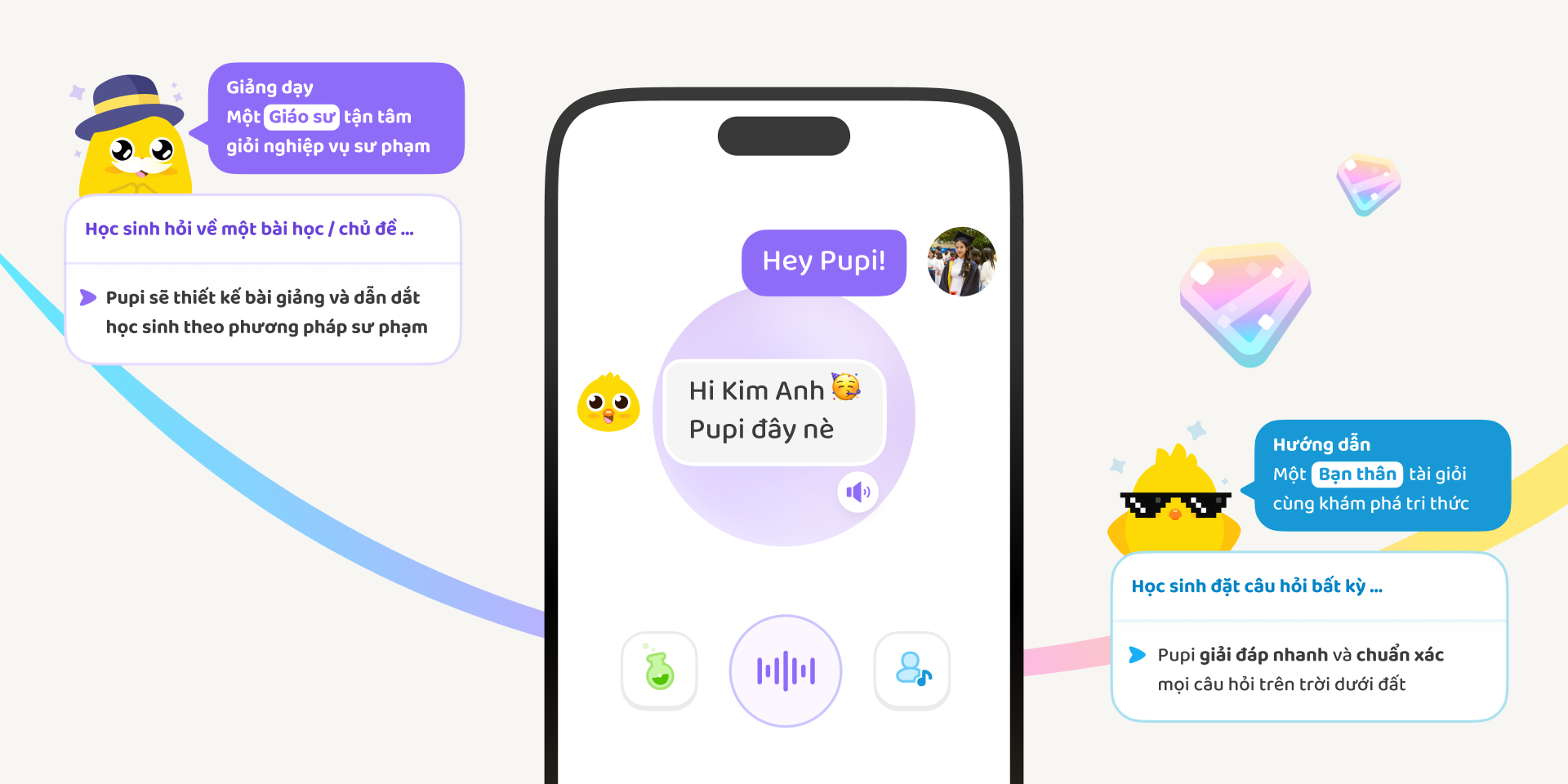
- Ideate flows: Solver loop: Ask → Explain → Practice → Earn experience points. Voice input. Adaptive next lesson. Leaderboard.
- Prototype structure: Exercise solver, voice waveform and transcript. Chat by hand (photo + text) and talk by mouth (Hey Pupi!).
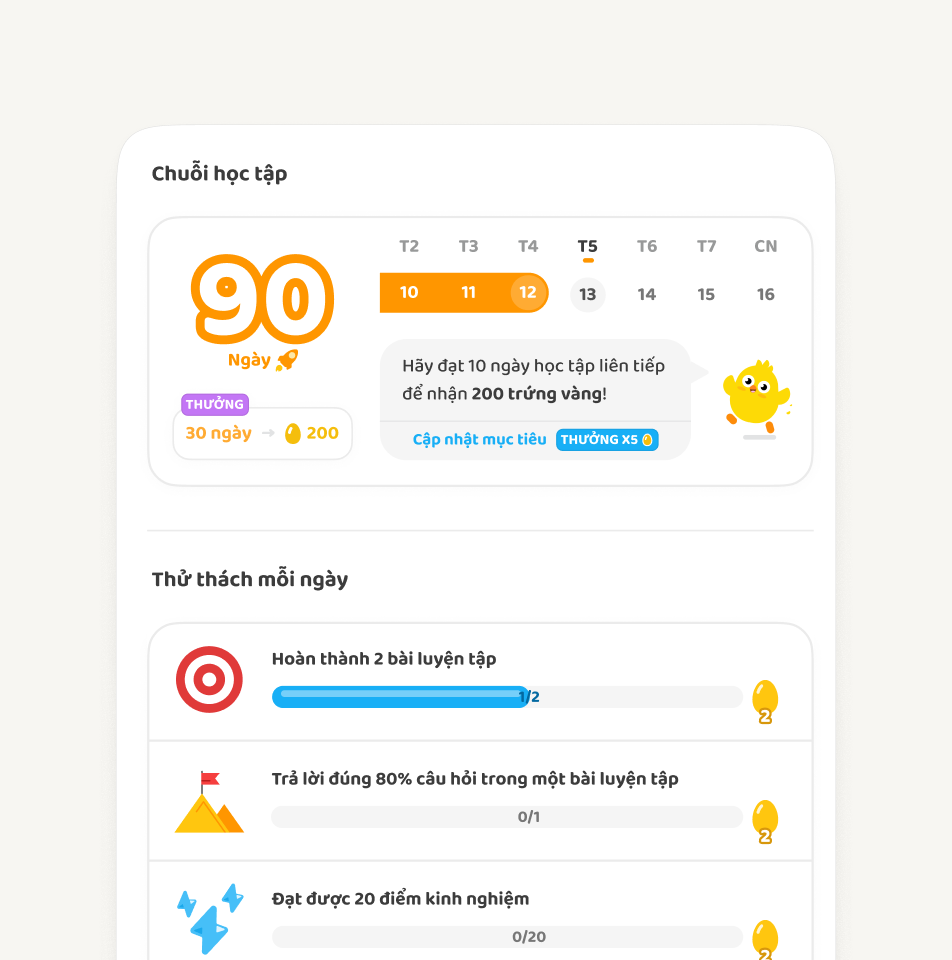
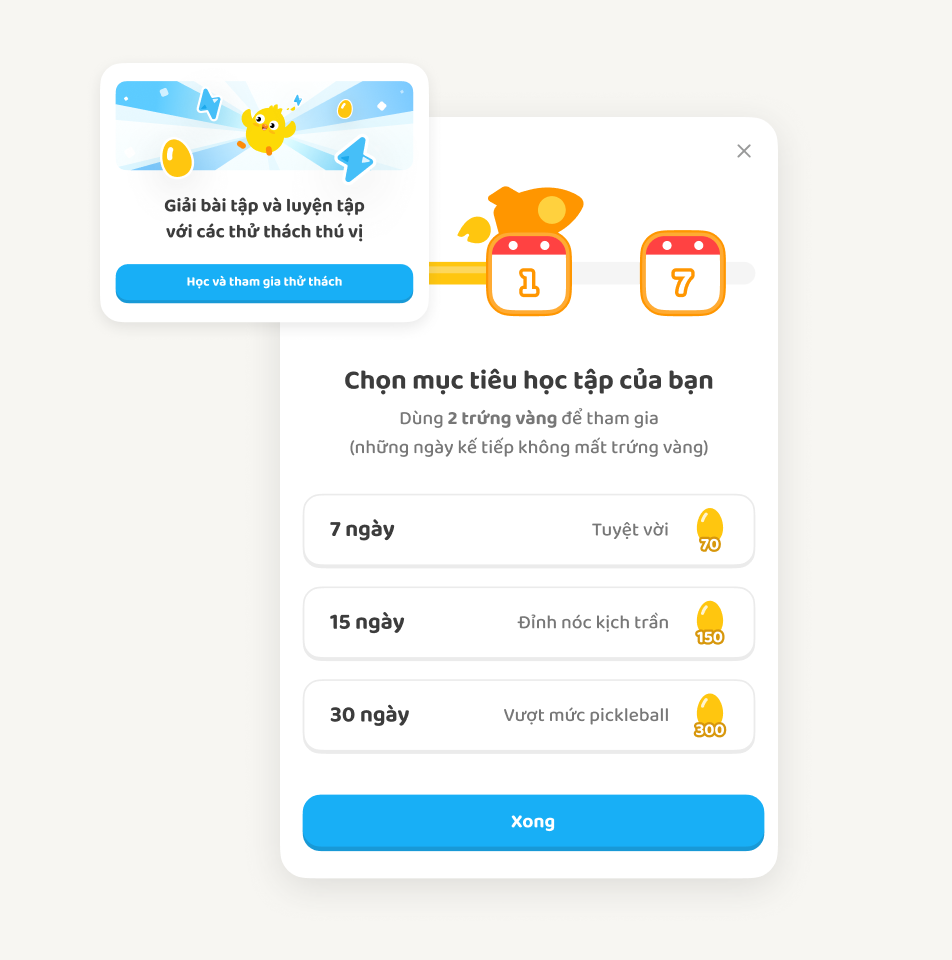
- Streak commitments: Streaks that open only through practice, plus time goals (2 quizzes) and quality goals (80% correct) — 3-day streak rewards toward 20 experience-point goals.
4. Visual Design
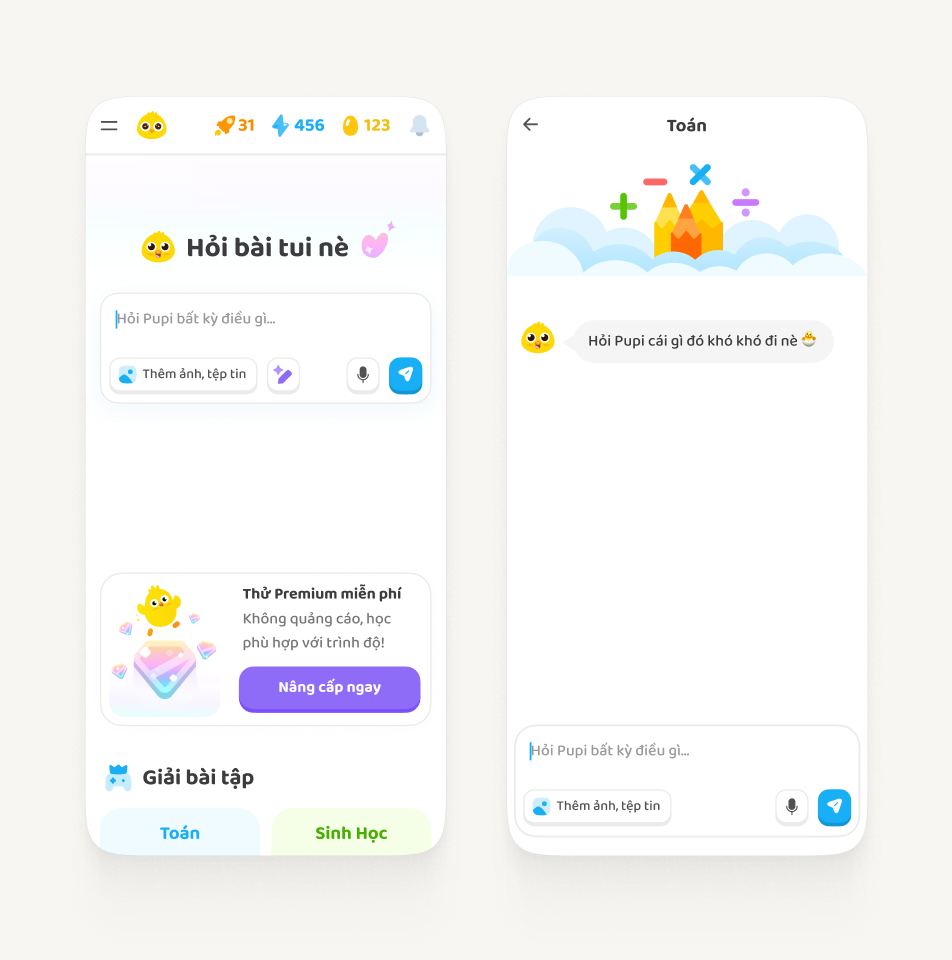
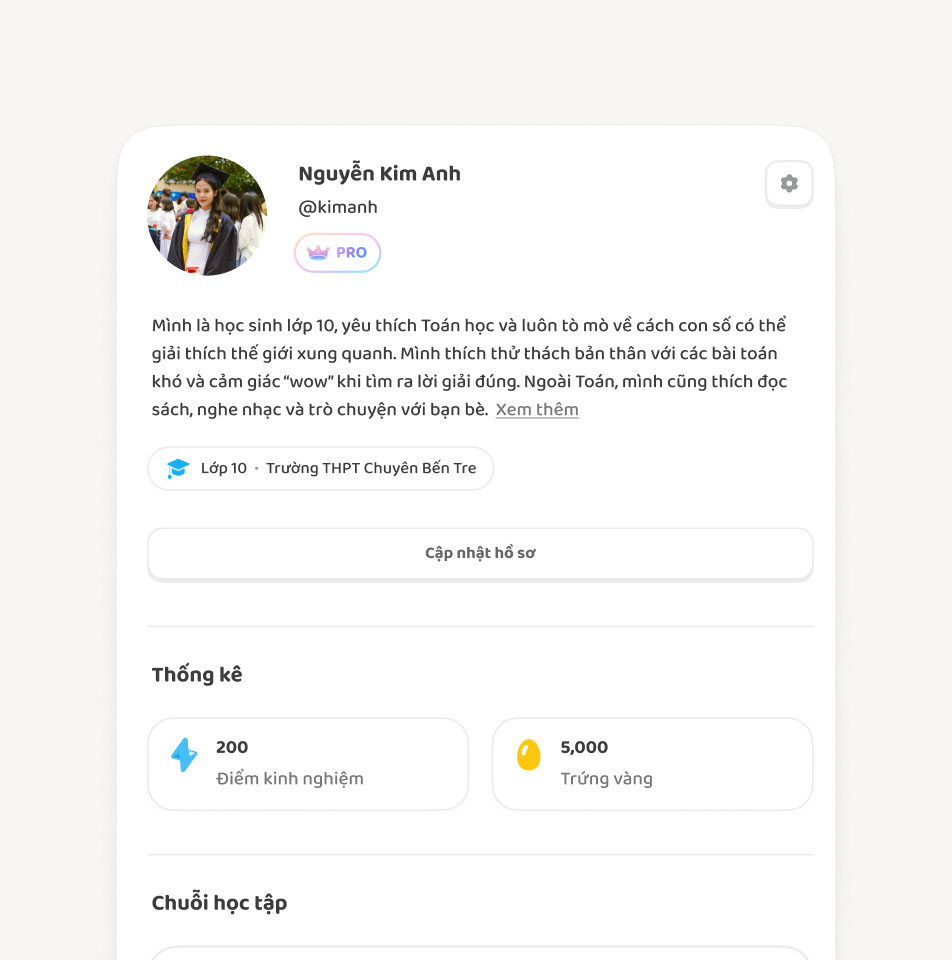
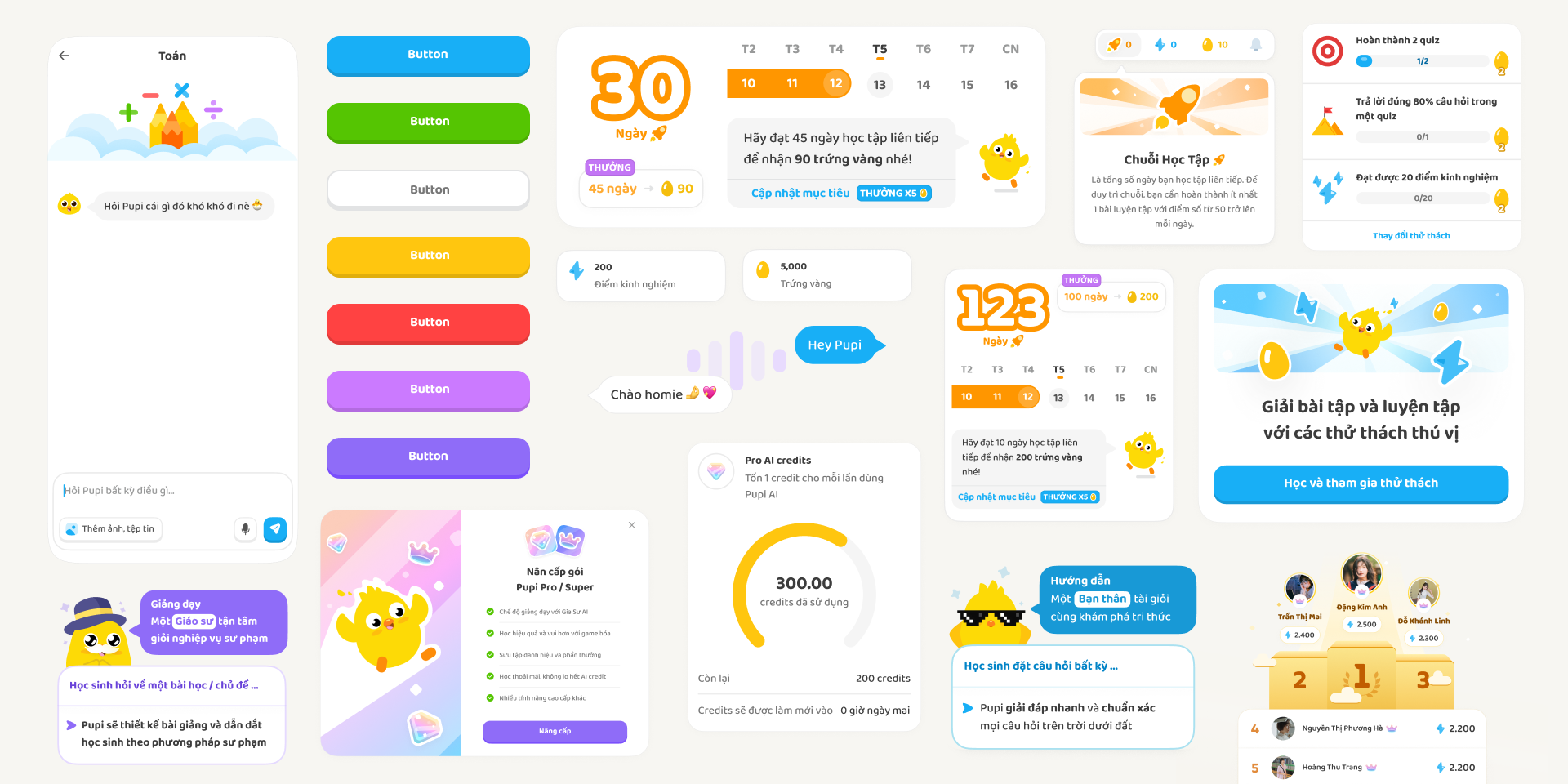
- System craft: The Pupi mascot scenes, AI chat interface, voicemode and quiz.
- Persona voices: Study Buddy (cheerful, quick, funny, always encouraging — “Ask me your homework”); Tutor (patient, caring, grounded in teaching method); Expert Teacher (personal radar with condition-and-reward framing).
- Tone of voice: Split one hidden tone toggle into two clear voices: Teaching and Guidance.
5. Testing & Finalization
One metric per layer — not logged-in daily active users. Each metric names its source:
- Grounding demo: “Who are Quang Trung and Nguyễn Huệ?” — ChatGPT said they were two different dynasties. Pupi answered correctly, quoting a Vietnamese History textbook (grade 7, lesson 23).
- Learning lift, prototype comparison (vs answer-only prototype): +30% lesson completion vs the answer-only prototype. Practice retries per session went up.
- Handoff specs: Experience-point formula, step-by-step hints, and quizzes appear rules on chat interface.
6. Measure & Iterate
I measure results with the product and data teams. We track how key numbers change and find out why.
- Guidance voice mode kept free: Guidance voice mode stayed free — it is the main input for young learners, not a paid extra. For Teaching voice mode guiding step by step and making sure student actually understand the topic is required a Pro/Super subscription plan.
7. Scale
- Scalability: Design tokens, the Pupi mascot scenes, AI chat interface, voicemode, and experience-point components — all could be reused by the mobile team. Prototyping for the next subjects went about ~40% faster.
IV. Outcome
1. Design Solution
A dual-mode AI companion with honest gamification: hints before solutions, and practice gates before experience points.
- Teaching mode: clear lessons, checkpoints, quiz gates
- Teaching mode: conversational homework help, suggested prompts
- Voice tutor: waveform, live transcript, text backup
- Adaptive courses + Leaderboard
- Ranks by quality
- Streaks tied to practice
2. Testing
Does it really work? In 5 internal team usability tests I asked: does this help you understand and keep studying — not just get answers?
Design repeats: split the voice modes.
“Pupi is a study buddy, not an answer machine.”
3. Results
Beta proved the shift from shortcut to habit.
- Faster start with voice and hints-first guidance.
- More trust, with experience points for completion, not question count.
- More return visits through Leaderboard motivation.
V. What I Learned
- Think in loops, not screens. Ask → Explain → Practice → Earn experience points → Return. This loop aligned the chief technology officer, the engineering team, and our advisor.
- Ethical gamification wins trust. Slower experience-point earning annoyed power users at first. But parent trust and mid-level retention paid it back. Kill any mechanic that boosts opens without practice.